


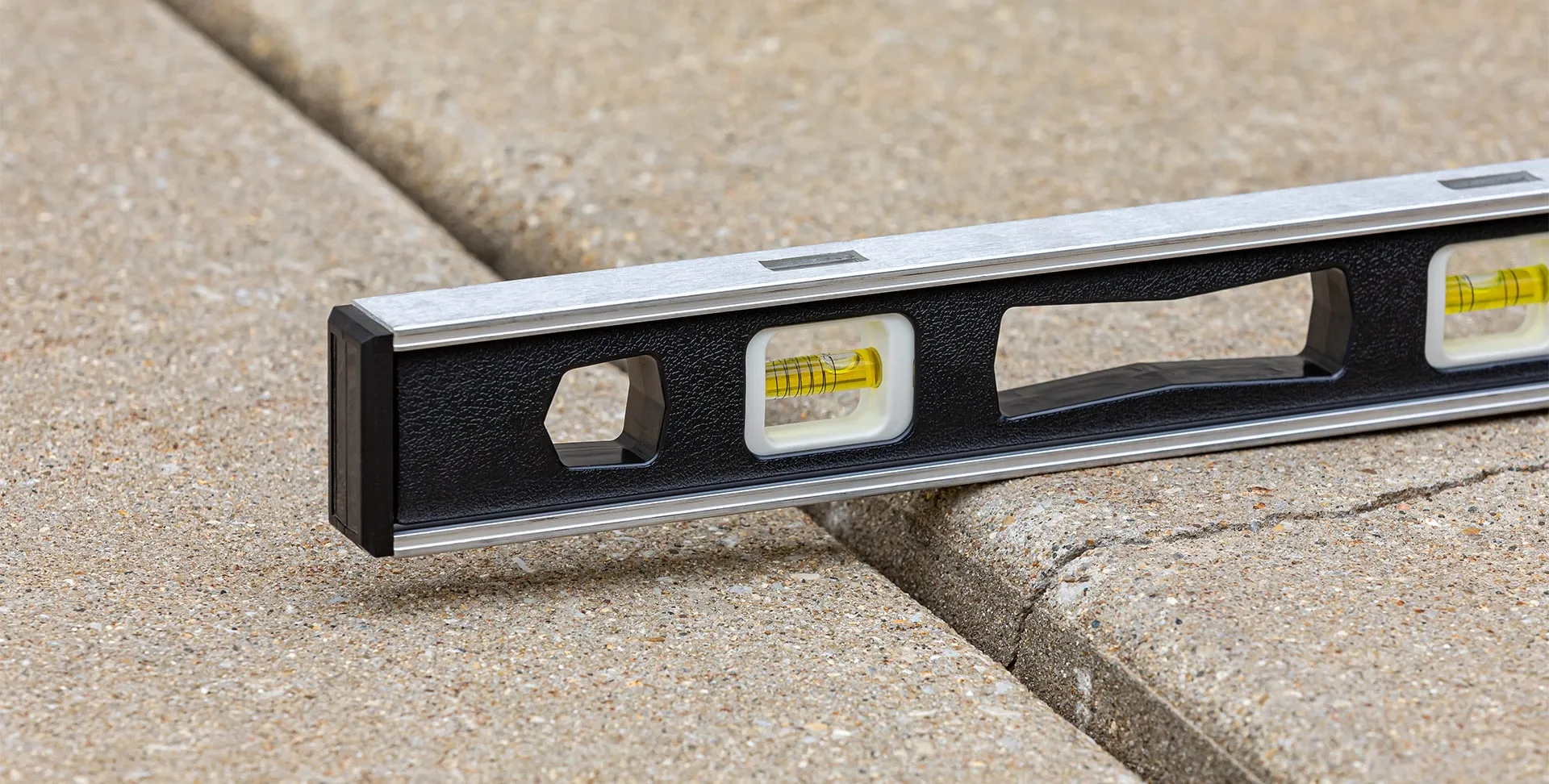
ADA Sidewalk Assessments
Americans with Disabilities Act (ADA) sidewalk assessments and how they fit into your city’s self-evaluation and transition plan.

ADA Sidewalk Assessments for Full Self-Evaluations and Transition Plans
For cities and public entities that are responsible for walkways, a sidewalk assessment is the part of an ADA self-evaluation that looks at the public right-of-way.
Daxbot supports cities in this work by collecting sidewalk, crosswalk, and curb ramp data across their entire network. We check these conditions against PROWAG using our Dax Compliance Score, and deliver quality-checked, GIS-ready results that support prioritization and phased improvements.

Quick Overview
What a Self-Evaluation Does
Reviews services, policies, practices, and access barriers that may limit access, including barriers in the public right-of-way when the city is responsible for streets, roads, or walkways.
Quick Overview
What a Sidewalk Assessment Does
Records the condition of sidewalks, crosswalks, and curb ramps as the public-right-of-way portion of the broader ADA review.
Quick Overview
What an
ADA Transition Plan DoesUses those findings to identify obstacles, describe how barriers will be addressed, and set a schedule and a plan for implementation.


How Sidewalk Assessments Fit Into ADA Planning
For public works and ADA staff, it helps to remember that the sidewalk assessment is just one part of the ADA process. It is a key piece for understanding pedestrian access and shaping the transition plan that follows.
ADA self-evaluation
The city reviews its services, policies, practices, and related access barriers to identify where people with disabilities may face unequal access. For cities with responsibility over streets, roads, or walkways, that review can include sidewalks, curb ramps, and other pedestrian features in the public right-of-way.
Sidewalk/public-right-of-way assessment
The city checks the condition of sidewalks, crosswalks, curb ramps, and other pedestrian features to find existing barriers to access.
Transition plan
The city uses the findings from its self-evaluation to identify accessibility obstacles, plan the work to rectify them in phases, match it with budgets and capital projects, and identify the official responsible for implementation.





What Municipalities Usually Need From Sidewalk Assessments
The best sidewalk assessment data does more than just show that barriers are there.
This is especially helpful for cities that need to go beyond simply responding to complaints and instead get a full picture of pedestrian accessibility across their network.
Cities usually need information that helps them:
Identify where sidewalk, curb ramp, and crossing conditions may limit accessible travel.
Compare conditions across corridors, neighborhoods, or project areas.
Support GIS-based review and prioritization.
Distinguish more significant barriers from less urgent issues.
Inform consultant review, public communication, and long-term maintenance planning.
Organize repair needs in a way that supports phased implementation.

Where Daxbot Fits In
Daxbot supports the public-right-of-way part of a city’s ADA self-evaluation.
Collects Structured Data
We collect clear, structured data on sidewalks, crosswalks, and curb ramps.
Evaluates Against PROWAG
We evaluate measured public-right-of-way conditions against PROWAG and upload the results into ArcGIS and other GIS systems.
Supports Prioritization
We include accessibility scoring on each recorded segment to support prioritization and bucket needed repairs for phased improvement planning.











Relevant
ADA &
PROWAG References
For readers who want to review the standards, regulations, and guidance behind this page, these are the main references.


Answers
to Common Questions
Use this section to clarify how sidewalk assessments, ADA self-evaluations, transition plans, and Daxbot’s role connect.

Is a sidewalk assessment the same as an ADA self-evaluation?

Not by itself. A sidewalk assessment is the public-right-of-way portion of a broader ADA self-evaluation when a city is reviewing sidewalks, curb ramps, crossings, and related pedestrian features.
How is the transition plan different?

The transition plan comes after the self-evaluation. The city uses its findings to identify accessibility obstacles, plan the work to rectify them in phases, match it with budgets and capital projects, and identify the official responsible for implementation.
Are sidewalks the only thing reviewed in a self-evaluation?
No. A self-evaluation reviews the city’s services, policies, practices, and access barriers, including facilities and public buildings. Sidewalks, curb ramps, and crossings are the public-right-of-way part of that review.
Can Daxbot support a broader transition-plan effort?
Yes. Daxbot works with engineering and compliance partners who support the entire transition plan, including other parts of the self-evaluation. Cities can bring in Daxbot for the sidewalk and public-right-of-way work, and we help connect that piece to the larger plan.
What does Daxbot provide?
Structured data on sidewalks, crosswalks, and curb ramps across your network, evaluated against PROWAG with our Dax Compliance Score, plus accessibility scoring on each segment, delivered as quality-checked, GIS-ready results for ArcGIS and other GIS systems.
Need Your Sidewalks Assessed for Compliance?
Talk to Daxbot about a sidewalk, crosswalk, or curb ramp assessment as part of your compliance planning.
Our team is here to help...