



Daxbot LogoContact us

Hilton Head, SC Sidewalk Accessibility Assessment

How Dax Helps You Video Overview

Automated Pathway Assessments

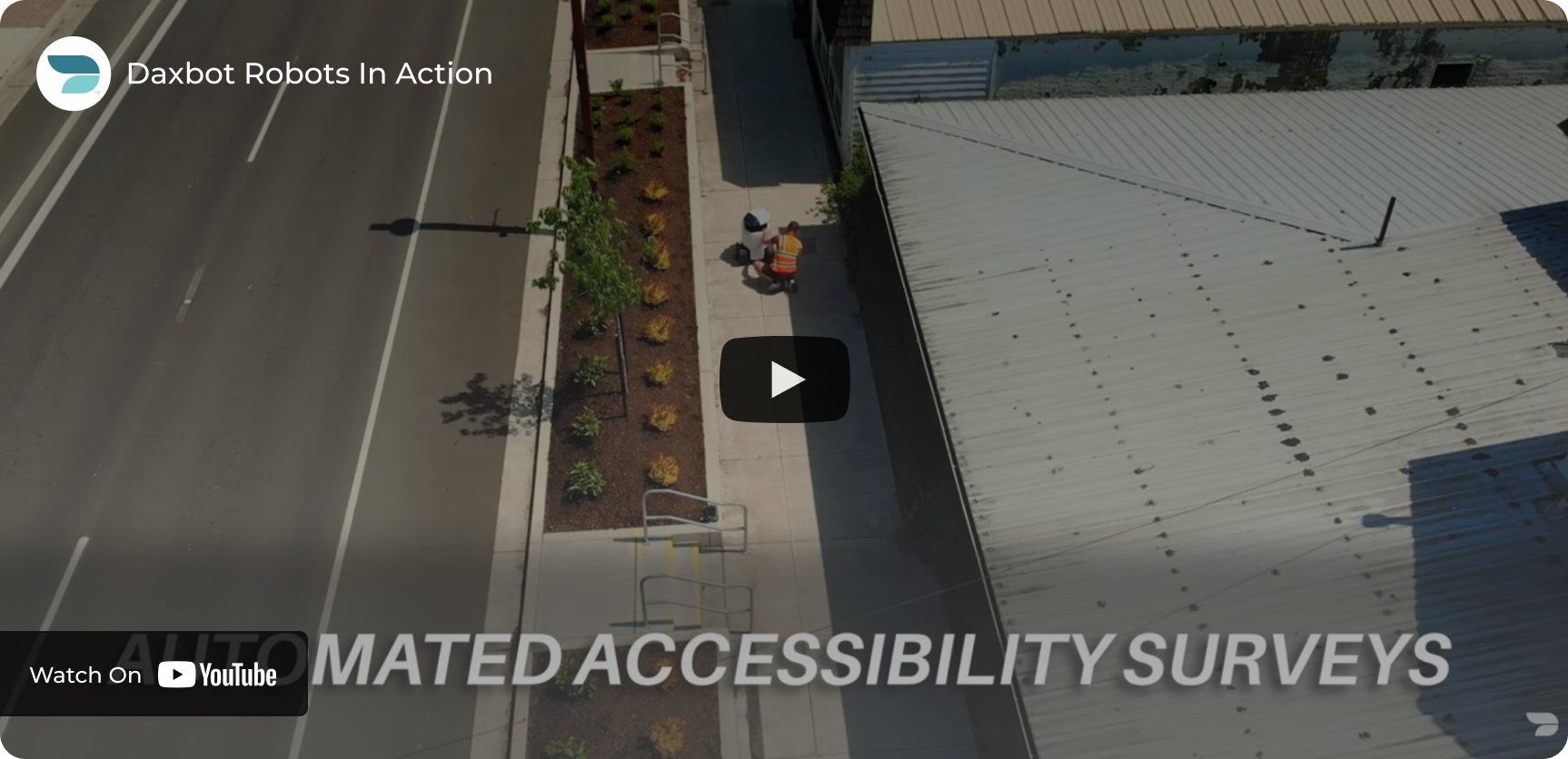
Dax robots are gathering accessibility data on several high-priority sidewalk corridors within the Town of Hilton Head on behalf of the Town of Hilton Head and Bureau Veritas. Working with Bureau Veritas, we’ll use the measurements we collect to create a map of sidewalk conditions to help keep pedestrian pathways within the Island of Hilton Head accessible and safe.

Dax robots move at walking speed down pedestrian pathways, taking accessibility measurements and keeping human crews out of traffic. As they move, they capture data for sidewalks, curb ramps, and related pedestrian facilities. Daxbot asks motorists to show the same courtesy they would give to any road maintenance worker.

When a bot finishes its assessment area, it will go into "snooze" mode to upload data and await pickup. This is normal and does not mean there's anything wrong with the bot.

Data

Dax Instrumental Accuracy

For the engineering-minded, here are the  
instruments Dax uses to collect pedestrian facility data:

Technical Specifications

MeasurementMeasuring DeviceAccuracy
Elevation MeasurementsKeyence IL-300 Laser Measurement1/32 inch
Distance MeasurementsRTK GPS System augmented with internal Tread-Based System1/16 inch
Slope MeasurementsCTi TILT-57A Inclinometer0.03%
PhotogrammetryHigh-resolution optical measurements> 97%
Common questions

Answers
to Common Questions

Who owns the robots?

The robots are designed, manufactured, and operated by Daxbot, based in Philomath, OR. Daxbot operators use the robots to collect engineering data on pathways for cities and universities.

Are the robots recording me?

No, robots are not collecting personal data. Daxbot cameras are focused on the sidewalk in front of them and are used only to collect pedestrian facility data and aid with navigation. The only time video gets saved is in the event of a safety-related incident.

Why is the robot sitting still for so long?

When a bot finishes an assessment area, it will go into an idle mode to upload pathway data or wait for its next task. Uploading data doesn’t take long, but depending on where Dax’s next task is, it may have to wait for a longer period to be re-located.

How does robot data collection compare to manual data collection?

A robot can measure up to 8 miles of sidewalk per day, compared with about 2 miles per day for a two-person manual crew, and it collects continuous measurements rather than measuring at intervals every several feet. This gives cities faster, more actionable data.

How does cost compare?

Automated collection saves cities money. Because the work can often be completed faster and with more detailed data, robotic collection can reduce the overall project timeline and cost compared with traditional manual methods.

Are Dax robots replacing humans?

No. The robots are a tool used to measure pedestrian facilities more efficiently and will be in town just long enough to complete their work. City staff, consultants, engineers, and ADA coordinators still guide the project and make the planning decisions.

Back to top

Talk to Sales

Industry

Select your industry

Tell us more about your project or inquiry*

By submitting this form you agree to our Privacy Policy.

Request Data Sample

Data Requested

Select one or more

By submitting this form you agree to our Privacy Policy.

Talk to Sales

Your Requirements

Type of Patrol

Select your patrol type

By submitting this form you agree to our Privacy Policy.

Request Info Packet

Info Packet Requested

Select one or more

By submitting this form you agree to our Privacy Policy.

Contact Us

I’m Interested In

Select one

Tell us more about your project or inquiry*

By submitting this form you agree to our Privacy Policy.